Showing posts with label Mongabay Special Reporting Initiative. Show all posts

Monday, June 30, 2014

Hawaii, Ecotopia, Mongabay, Africa!

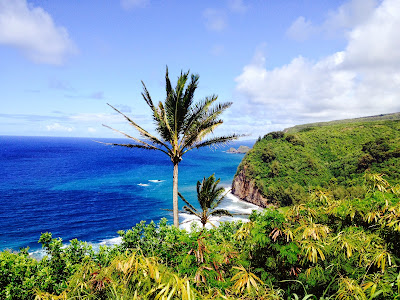
Pololu Point Lookout, Hawaii (the Big Island). Copyright (c) 2014 Wendee Nicole


Hello pumpkins! Soon I will post more photos and update about my week in Hawaii, where I visited my long time friend Elissa (who is a pilot for Mokulele airlines!) and traveled around Oahu and the Big Island (loved Volcanoes National Park!). The house I've lived in for the past decade, where I've raised my sweet children, goes on the market in a couple of days, and when my son goes off to University of Texas this fall, I am moving also, to .... AFRICA!! I am excited and nervous and melancholic all swirled into a bundle. But for the past several weeks, I have been prepping my house, landscaping, painting, fixing stuff (with the help of a dear guy friend - thank God for him!) and now the time has come. Houses are selling like hotcakes here, and I hope and pray it sells quickly and for what I am asking, as some of that money will be used to fund the nonprofit I've founded with a friend from Africa!

Check out our new website, which I designed, for the Redemption Song Foundation, and please "like" us on Facebook too! Our vision is "empowering youth through education, poverty alleviation, spiritual development and song" and we are accepting donations via the link on our website (or by check, but you have to send to me for now... I'm in the process of registering the "dba" and the other info for us before I move). We are providing school fees and basic necessities like food, clothing and hygiene /medical care information. We have plans for other exciting projects, like income-generating activities for older youth. One of the problems in the area is that the most impoverished girls and women can't afford menstrual pads, and they use leaves, dirty rags, etc, and we want to provide pads to these to girls, and create an income stream to those working on the pad project, making them using a cool machine made by an Indian entrepreneur (profiled on the BBC and in the new documentary, Menstrual Man). They often drop out of school when they start their periods. Some organizations provide hygiene packs to girls, but not everywhere - there is a big need. We will be starting an Indiegogo campaign to raise money for this soon.

I have had two more feature articles come out under my Mongabay Special Reporting Initiative Grant! Check them out:

  • Tipping the scale: How a political economist could save the world’s forests


    “[T]here’s a five-letter word I’d like to repeat and repeat and repeat: Trust.” Thus spoke Elinor Ostrom in her 2009 Stockholm lecture, when at age 77 she became the first woman to receive the Nobel Prize in Economics. She’d spent a lifetime traveling the world and observing everyday citizens cooperating against all odds. Ostrom frequently encountered groups of people managing commonly shared resources, creating systems based on trust, such as peasant farmers in Nepal cooperatively managing simple irrigation systems, and people working to solve human-wildlife conflict with forest elephants in Kenya. Such collective behavior flew in the face of the longstanding theory of the day, which said that people will selfishly take whatever they can, ultimately causing a “tragedy of the commons.”

  • Ecotopia emerging: Sustainable forests and healthy livelihoods go hand in hand


    Callenbach's 1975 utopian novel Ecotopia became wildly popular among environmental-leaning folks, hippies, and progressive thinkers of the day. The rebels who founded Ecotopia believed human health and livelihoods can coexist with nature, and built their nation For a book that has fallen mostly off the radar, outside of a smattering of college classes and small-scale environmental movements, certain aspects of Ecotopian society fall remarkably in line with research by Economics Nobel Laureate Elinor Ostrom, and more recently the work of Arun Agrawal, a scholar who studied under Ostrom. Research - described in this piece - discusses how decentralization of conservation policies and intrinsic motivations to preserve the environment are found in time-tested research, as well as the almost prophetic writings of Callenbach some 40 years before.

A green sea turtle we saw while snorkeling in Paradise Cove on Oahu. Copyright (c) 2014 Elissa Zavora. Love this image!! So cool! It was an amazing experience to swim next to the turtle, and another one showed up too! More to come. Love to you all!

Monday, April 21, 2014

I interviewed Jane Goodall - a hero of mine!

A young chimpanzee in the trees at the Budongo Forest in Uganda. Who is watching whom? 


Articles under the Mongabay Prize for Environmental Reporting grant I received have started coming out! This is a 6-month grant to report on tropical forest conservation that allowed me to travel to Uganda to report on some initiatives and projects there. Several more articles will be coming out, but here's a start!


If you have been following any sort of wildlife or science news, you may have seen that the legendary Dr. Jane Goodall turned 80 on April 3rd. On the Sunday before her birthday, I interviewed her by phone for Animal Planet's 80 Years of Jane online content. She was in Montreal about to fly to California, and it was so neat to hear her voice over the phone lines. Although mountain gorillas and not chimpanzees are my favorite animal, in high school I watched many a Jane Goodall National Geographic documentary, as well, and read her book In the Shadow of Man. I have the coolest job!


Here's a link to my Dr Jane Goodall Q&A for Animal Planet! I also did this longer piece for Animal Planet: 10 Reasons Why Everyone Should Love Jane Goodall! (If you scroll to the bottom of the first page there, you can click "show all on one page" so you don't have to click through one by one.)


But my favorite articles so far is published on CBS Smart Planet: How Jane Goodall’s legacy is alleviating poverty. This is about the Sustainable Livelihoods Project that I visited near Hoima, Uganda. Not long after I arrived in Uganda, I drove from Kampala to Budongo Forest Reserve with Peter Apell of the Jane Goodall Institute-Uganda, and got all those great quotes on that trip - he is a great interview. I spent a couple of days tracking chimps and such at Budongo, and then drove to the project in the field with JGI's Tomas Acidri, and interviewed one of the community villagers, Joram Basiima, whose photo appears in the article. I was impressed with the project and their approach. More articles from Uganda, and from the Mongabay grant, will be coming soon! Stay tuned!

Sunday, December 01, 2013

Mongabay Prize for Environmental Reporting!

Ferns in Oregon. Copyright © 2013 Wendee Nicole


I'm thrilled to announce that I was awarded the first Mongabay Prize for Environmental Reporting! You can read the announcement here: Prize exploring the next big idea in rainforest conservation announced


The prize sought proposals to explore the question of "What's the next big idea in tropical biodiversity conservation?". After a two-month application window and a month of deliberations, this week an independent panel of journalists, conservation practitioners, and tropical forest specialists selected environmental journalist Wendee Nicole as the first recipient of the Mongabay Prize for Environmental Reporting. 

Nicole's reporting will examine the wider topic of innovation in tropical biology conservation, with focus on polycentric governance in Uganda and Peru. Her work will center around the late Nobel Prize-winning economist Elinor Ostrom's theories of polycentric governance and decentralization: putting power in the hands of locals. Nicole will spend time in both countries, interviewing on-the-ground actors and looking at the struggle to combat poverty while preserving shared resources like forests and biodiversity. In the process, Nicole will produce a series of articles on what's working and what's not in the world of forest conservation.

The 6-month, $20,000 grant will allow me to travel to Uganda and Peru to report on projects that exemplify polycentric governance. Though that's a mouthful, it is a very important and exciting concept. Ever heard of the "tragedy of the commons" where people are thought to always act selfishly and therefore deplete a common patch of land, such as the classic example of livestock overgrazing? Ostrom reviewed myriad real-life scenarios as well as conducting her own behavioral research and found that sharing a commons does not always end a tragedy. Rather than taking power away from local people and putting it in the hands of a national government, she found that giving local people a say and allowing them to have an influence on rules related to managing a forest, grassland, a fishery, or public health will allow sustainable management of that common good. It's cool stuff, and as my last post on "Mini miracles in Chattanooga" mentioned, I felt like I knew a trip to Uganda to see mountain gorillas and report on the amazing work of Conservation Through Public Health (CTPH) was destined after I ran into Dr Gladys (CTPH founder) at the Society of Environmental Journalists conference.

Here's a link to my bio and project info on the Mongabay Special Reporting Initiative Fellows page. I can't tell you how thrilled I am that I will be traveling to Uganda to be face to face with mountain gorillas within a few months!! I have been rereading George Schaller's Year of the Gorilla and need to get another copy of Dian Fossey's Gorillas in the Mist because mine is falling apart.

I just returned from a week in Oregon, and will post some photos from my trip soon. First I still have a post from a visit I made to DC in October. I'm getting behind on my blog!